Carpet face weight measures the weight of the carpet pile in ounces per square yard, not including the backing. A higher face weight can indicate more material and greater comfort, but it's not the only measure of quality. Fiber type, density, and construction all play an equal role, and the best carpet is the one that balances all of these factors for your specific room and lifestyle.
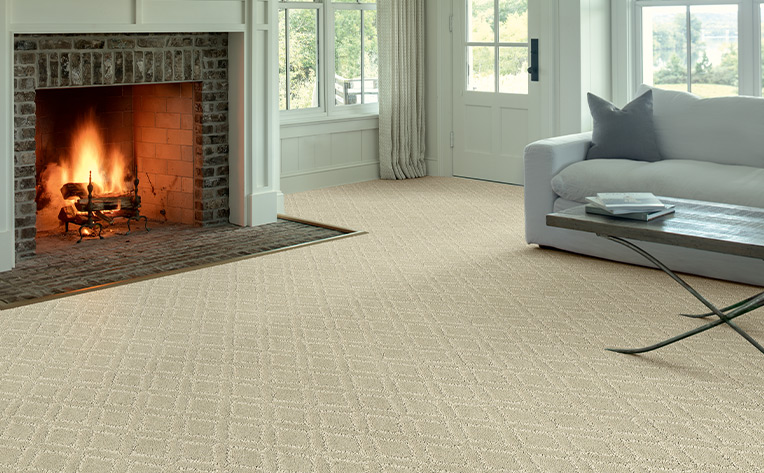
Choosing the right carpet for your home is about more than just picking a color, it's about finding the perfect balance of comfort, durability, and style for your family's everyday life. As your friendly flooring experts, we're here to make the process stress-free and straightforward. To help you feel confident in your choice, we're starting with the basics: understanding carpet face weight. Let's break it down together so you can find a carpet that fits your home and your needs perfectly.
Face weight is the weight of the carpet pile per square yard of carpet, measured in ounces. The face weight does not include the backing materials, only the weight of the carpet fibers. This is important to understand because different types of fibers will have different weights, and comparing two carpets made of different materials will not paint you a full picture of carpet quality. In addition, face weight should not be confused with a carpet's total weight, which includes the weight of the backing and the carpet fibers.
Here's a way to think about this in simple terms: Imagine you had two T-shirts of the same style, size, and material. These two shirts are identical, except one is thicker than the other. Comparing the thickness or the weight of the two shirts would be equivalent to comparing the face weight of two carpets. If the two shirts, or the two carpets, were made from different materials, then comparing their face weight or thickness alone wouldn't necessarily tell you which has better quality.
People looking for new carpets often think that face weight is a determining factor in carpet quality, but this isn't always the case, despite being a key selling point. The face weight of the carpet doesn't mean that it is more durable or that it will last longer. In fact, a carpet with a lower face weight might outlast a carpet made of different materials with a higher face weight because of the construction and characteristics of the fibers. For example, Berber carpets often have lower face weights than Saxony carpets. A Berber carpet with a lower face weight might outlast a Saxony carpet with a higher face weight.
In addition to face weight, factors to consider in determining the quality of a carpet include:
By examining all of these factors together, you will get a holistic understanding of the pros and cons of the different types of carpet you are considering.
A good face weight for residential carpet typically ranges from 40 to 60 ounces per square yard, especially for high-traffic areas like living rooms. A higher face weight generally suggests a more durable carpet, but it's not the only factor to consider. Carpet padding and carpet density also significantly affect how well the carpet performs after installation.
Most residential carpets have backing weights between 5 and 10 ounces per square foot, and that's a good target range to keep in mind. While backing weight isn't discussed as often as face weight, it contributes to the overall carpet weight and stability. A strong backing supports a durable carpet that holds up well during carpet installation and long-term use.
Not necessarily. A heavier carpet often suggests more material and potentially greater comfort, but it's not a guarantee of quality. The right carpet combines proper carpet padding, high carpet density, and the right face weight with appropriate backing.
For high-traffic areas, a density of 5,000 or higher (measured in ounces per cubic yard) is ideal for a durable carpet. This ensures the fibers are tightly packed, making the carpet more resilient and longer-lasting. High density is especially important in living rooms and other commonly used spaces.
Carpet weight is a helpful starting point, but it doesn't tell the whole story. While face weight and total weight (including backing) give an idea of how much material is used, they don't account for carpet density, fiber type, or construction, all of which affect durability. It's best not to rely on weight alone when deciding on the ideal carpet. You should also consider how the carpet is constructed as well as the quality of the padding.
A taller pile height increases face weight because there's physically more fiber in the carpet, but that doesn't automatically mean it's more durable. A carpet with a high pile and loose density might feel plush but wear down faster in high-traffic areas. On the other hand, a shorter pile with tightly packed fibers could have a lower pile height but still be the most durable carpet, thanks to higher density.
Face weight is just one part of choosing the right carpet, but you don't have to figure it out alone. We're here to help you make the best choice for your home and your family. Whether you're looking for something cozy for the kids to play on or durable enough to handle everyday life, our friendly, knowledgeable specialists are ready to guide you every step of the way. Contact us today and let us help turn your dream home into a reality.
